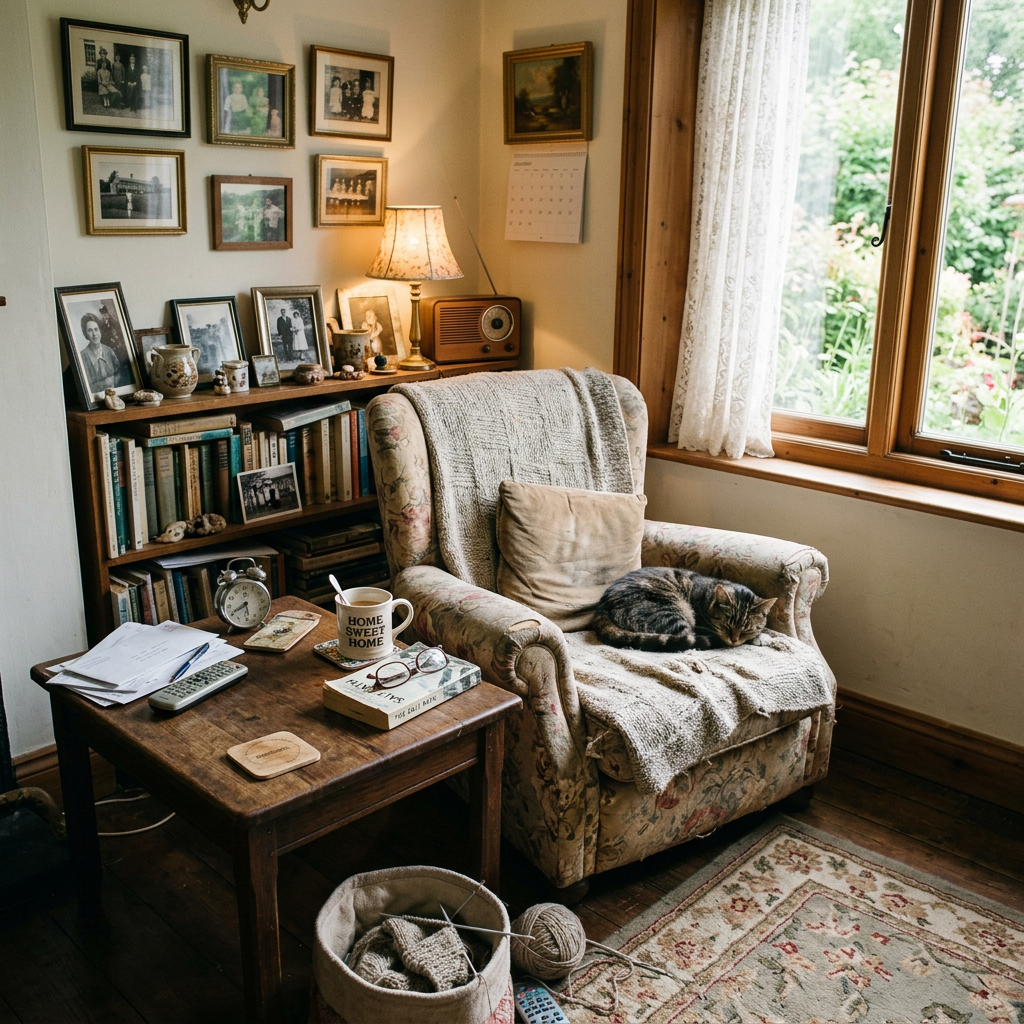
That house you’ve spent years paying for… The tools you’ve carefully collected… The furniture you chose… The books on your shelves… The photographs in your drawers… The things you saved because they mattered…
One day, they will belong to someone else.
Maybe your children will divide them… Maybe a stranger will buy them… Maybe most of them will end up in a donation bin… And eventually, almost nobody will remember what you paid for any of it…
That’s not depressing.
It’s liberating.
We spend an enormous portion of our lives acquiring things.
- We work for them.
- Save for them.
- Insure them.
- Protect them.
- Upgrade them.
- We rearrange our homes around them.
And somewhere along the way, we begin confusing having things with having a life.
But possessions have a strange destiny… They outlive us.
And when we are gone, they become someone else’s problem. That expensive dining room table won’t know it was expensive… That car won’t remember how carefully you maintained it… The house won’t remember how many years you spent making the payments.
Objects don’t carry our memories automatically.
People do.
That’s why an old object can be worth almost nothing financially and everything emotionally.
A pocketknife might be worth ten dollars… But if your grandfather carried it every day for forty years, you might never sell it.
A battered toolbox might be worth twenty dollars… But if your father used it to repair your childhood home, throwing it away can feel like throwing away a piece of him.
A handwritten recipe might be worth nothing… But make that recipe on Christmas morning twenty years after the person who wrote it is gone, and suddenly paper becomes priceless.
The object didn’t become valuable because it became older.
It became valuable because a human life became attached to it.
And this changes the way I think about our homes. Maybe we’re not supposed to fill them with expensive things. Maybe we’re supposed to fill them with meaning.
A house should contain evidence that somebody lived there.
- The scratch on the kitchen table.
- The height marks on the doorframe.
- The chair that has been repaired three times.
- The garden planted twenty years ago.
- The photograph nobody would put in a magazine.
- The ugly vase your daughter made in school.
- The fishing rod hanging in the garage.
- The old record player that still works.
- The bookshelf you built yourself.
None of these things are impressive. Until they’re yours.
Then they become part of the story.
We have become obsessed with making everything new. But there is something beautiful about making something last.
- Repairing instead of replacing.
- Restoring instead of discarding.
- Learning an old skill.
- Keeping a family recipe alive.
- Teaching a child how to use a tool.
- Building something that might still be standing when you’re gone.
There is a quiet rebellion in that. Because consumer culture tells us that value comes from novelty… Legacy tells us something different… Value can come from continuity… Something was here before you…
You cared for it… You added something to it… And someday, you hand it to someone else.
That’s how civilization has always worked at its best.
Not merely through invention… Through inheritance.
Think about the things you inherited that mean the most to you. Were they necessarily the most expensive?
Probably not.
They’re usually the things that carry a story.
- The watch someone wore.
- The quilt someone made.
- The recipe someone wrote down.
- The photograph someone took.
- The tools someone used.
- The chair someone sat in.
- The house someone built.
- The Bible someone carried.
- The fishing pole that went on every family vacation.
We don’t inherit objects… Not really.
We inherit pieces of people’s lives.
And someday, someone will inherit pieces of yours.
So perhaps the question isn’t: “What will I leave behind?”
You will leave things behind. That’s guaranteed.
The better question is: “Will anything I leave behind mean something?”
- Will someone find your workshop and know that you loved making things?
- Will someone open a cookbook and find your handwriting?
- Will someone sit beneath a tree you planted?
- Will someone repair a piece of furniture you built?
- Will someone tell a story about the ridiculous old car you refused to get rid of?
- Will someone look around a house and see evidence of a person who didn’t merely consume a life…but participated in one?
That’s a different kind of wealth.
Maybe that’s what we should be building. Not houses that look perfect… Lives that leave something behind.
Not collections designed to impress strangers… Collections that tell stories.
Not projects for the sake of staying busy… Things worth making because they might outlast us.
Not a home that says, “Look what I can afford.”
But one that says, “Look what we loved.”
Because one day, everything you own will belong to someone else.
- The house.
- The tools.
- The photographs.
- The books.
- The furniture.
All of it.
But if you’ve lived well, perhaps someone will pick up one of those things years from now…run their hand across it…and ask, “Who made this?”
And someone will answer:
“He did.” Or: “She did.”
And for a moment, a life that ended long ago will become present again.
Maybe that’s what it means to leave something behind.
Not to be remembered by everyone.
Just to have lived in such a way that something of you keeps giving after you’re gone.
So, this week, don’t just buy something new. Look around. Find something worth keeping.
- Repair something.
- Restore something.
- Make something.
- Write something down.
- Teach someone something you know.
- Plant something that will outlive you.
- Take a photograph.
- Tell the story behind an old possession.
And if there is something in your home that carries a piece of your family’s story, don’t let the story disappear with the object.
Tell someone… Write it down… Pass it on.
Because the greatest things we leave behind aren’t the things that prove we were wealthy.
They’re the things that prove we were here.
Hobbies & Homes is about exactly that: the things we make, keep, restore, collect, and pass on because they make a life worth living.
What is one thing you own that you would never sell, regardless of what it’s worth?
Tell us the story in the comments.
Someone else may be carrying a similar piece of their own history.
And maybe that’s how we keep the good things alive.
- Two Paper-and-Pencil Games for Thanksgiving Guests

- One Oven, Several Thanksgiving Dishes: A Simple Space-and-Time Worksheet

- Bring One Old Photo to Thanksgiving: Five Questions That Save the Story

- How to Dry Wet Hiking Boots Without Damaging the Leather

- When to Thaw Your Thanksgiving Turkey: A 2026 Fridge Planner

- Drafty Exterior Door? Try This Paper Test Before Buying Weatherstripping


Leave a Reply