Summer has a way of exposing everything your house has been quietly hiding.
The crack in the caulking that wasn’t a big deal in March becomes a water intrusion problem in July. The HVAC unit that ran fine last fall struggles through its first hundred-degree day. The deck that looked passable in April starts showing its age by August.
A little attention now…before the full heat of summer arrives…saves a lot of headaches and money later. Here’s a practical checklist of what to look at as summer gets underway.
Outside the House
Gutters and Downspouts
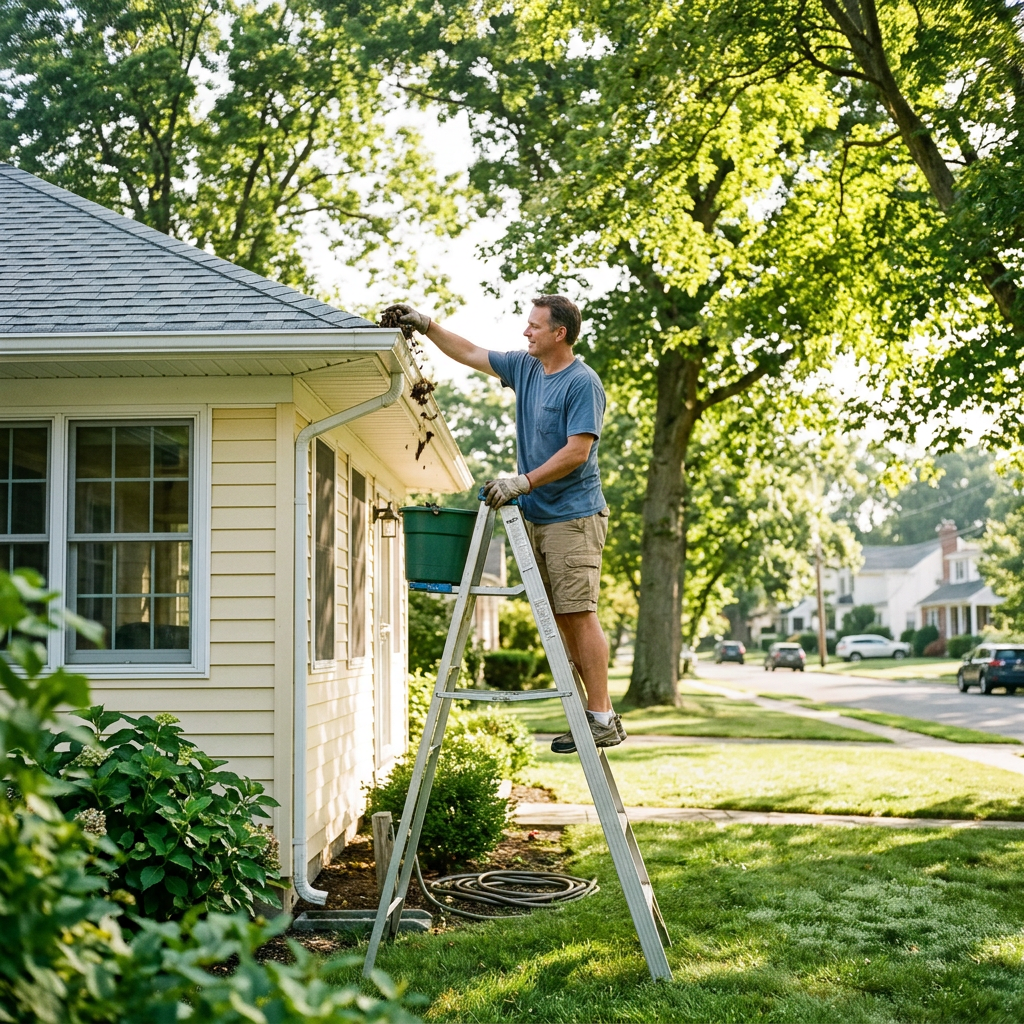
Spring storms leave gutters full of debris. If you haven’t cleaned them since fall, now is the time. Clogged gutters cause water to back up against your roofline and foundation…two of the most expensive repairs a homeowner can face. While you’re at it, check that downspouts are directing water away from the foundation, not pooling against it.
We’ve written a good beginner’s guide to cleaning gutters and roof inspection/maintenance here.
Roof Inspection
You don’t need to climb up there yourself. Binoculars from the ground work fine for a basic visual check. Look for missing or curling shingles, damaged flashing around chimneys and vents, and any areas where the roof line looks uneven. If something looks off, call a roofer before a small problem becomes a leak.
Exterior Caulking and Seals
Walk around the outside of your home and check the caulking around windows, doors, and where different materials meet…brick to wood, siding to trim, foundation to wall. Cracked or missing caulk lets in water and insects. A tube of exterior caulk costs a few dollars and takes an afternoon to apply.
We’ve written an easy-to-follow guide for caulking windows and doors here.
Deck and Outdoor Structures
Check deck boards for rot, loose fasteners, and structural integrity. Poke a screwdriver into areas that look soft…if it goes in easily, you have rot. Check railings for stability. Look at any pergolas, fences, or outbuildings for winter damage. Addressing small issues now prevents bigger structural problems down the road.
Driveway and Walkways
Freeze and thaw cycles crack concrete and asphalt. Fill small cracks before they expand. Concrete crack filler and driveway sealant are straightforward DIY projects that extend the life of your surfaces significantly.
Cooling Systems
HVAC Service
If you haven’t had your air conditioning serviced this year, schedule it before the first heat wave hits. A technician will clean the coils, check refrigerant levels, and identify any issues before they become failures on the hottest day of the year. Change your air filter if you haven’t recently…a clogged filter makes your system work harder and costs you more in electricity.
Ceiling Fans
Check that your ceiling fans are set to run counterclockwise in summer, which pushes cool air down rather than drawing it up. Most fans have a small switch on the motor housing to reverse direction. Running fans correctly can let you raise your thermostat a few degrees without noticing the difference…meaningful savings over a long summer.
Window Units
If you use window air conditioners, clean the filters before installing them. Check the seals around the unit to make sure hot air isn’t leaking in around the edges.
Plumbing and Water
Outdoor Faucets and Hoses
Check outdoor hose bibs for drips or leaks after winter. Inspect garden hoses for cracks. If you have an irrigation system, run it through all zones and check for broken heads or uneven coverage.
Water Heater
Summer is a good time to flush sediment from your water heater…sediment buildup reduces efficiency and shortens the life of the unit. It’s a straightforward process involving the drain valve at the bottom of the tank. Check the owner’s manual or look up a tutorial for your specific unit.
Check Under Sinks
Take five minutes to look under kitchen and bathroom sinks for any slow drips or moisture. Caught early, a minor leak is a quick fix. Left unattended, it becomes mold and causes cabinet damage.
Safety Checks
Smoke and Carbon Monoxide Detectors
Test every detector in your home. Replace batteries if needed. If any detector is more than ten years old, replace the unit entirely…the sensors degrade over time regardless of battery condition.
Fire Extinguisher
Check the pressure gauge on your fire extinguisher. The needle should be in the green zone. If it’s not, or if you don’t have one, now is a good time to address that. Keep one in the kitchen and one in the garage.
Dryer Vent
Lint buildup in dryer vents is one of the leading causes of house fires. Disconnect the vent hose from the back of the dryer and clean it out. Check the exterior vent cap to make sure it opens freely and isn’t obstructed.
A Few Hours Now, A Better Summer Later
None of this is glamorous work. But homeownership rewards the people who pay attention to small things before they become large things.
Pick a Saturday morning this month, work through the list methodically, and head into summer knowing your home is ready for whatever the season brings.
Your future self…the one who doesn’t have to deal with a failed AC unit in August or a leaking roof after a July storm…will appreciate the effort.
Let us know which home projects you are working on this month!
Hobbies & Homes is a community for people who believe a well-kept home and a creative life are worth building. New content every week.


Leave a Reply