This content was created with AI assistance and reviewed for accuracy and quality by the H&H team.
Imagine a world where you can be a valiant knight, a cunning rogue, or a wise wizard. That world is the realm of Fantasy & Tabletop RPGs (TTRPGs). More than just a card or board game, a TTRPG is a collaborative storytelling experience where players take on the roles of characters in a fictional setting, guided by a Game Master (GM) or Dungeon Master (DM).
This hobby is a powerful blend of creative writing, improvisation, performance arts, and strategic thinking. It’s a social activity that requires nothing more than a few friends, some dice, and boundless imagination. This guide is your quest-giver, here to demystify the process and help you start your adventure…whether you’re into world-building, character design, or simply joining a game.
The Benefits of Tabletop RPGs
Engaging in TTRPGs offers a wealth of cognitive and social advantages that are often overlooked:
- Supercharges Collaborative Storytelling
TTRPGs are fundamentally about building a story together. Unlike books or movies, the narrative is fluid and determined by the players’ choices. This enhances creative writing skills, encourages active listening, and teaches players how to build on each other’s ideas. - Boosts Problem-Solving and Strategic Thinking
While the game is about storytelling, the mechanics often involve complex challenges and tactical combat. Players must use their character’s unique skills and their own strategic thinking to overcome obstacles, making it a deep and engaging form of problem-solving. - Enhances Social Skills and Empathy
Role-playing requires you to speak from the perspective of a character who isn’t you. This practice of stepping into another’s shoes is a powerful exercise in empathy. Furthermore, the social setting of game night is a great way to build strong, lasting friendships. - A Creative Outlet for World-Building
For the Game Master (GM), TTRPGs offer the ultimate creative outlet. GMs design entire worlds, create complex characters, and craft intricate plots. This process of world-building is a deeply satisfying form of creative composition.
Essential Supplies and Preparation
You can start with just a pencil and paper, but a few key items will make the experience smoother and more immersive.
Essential Supplies
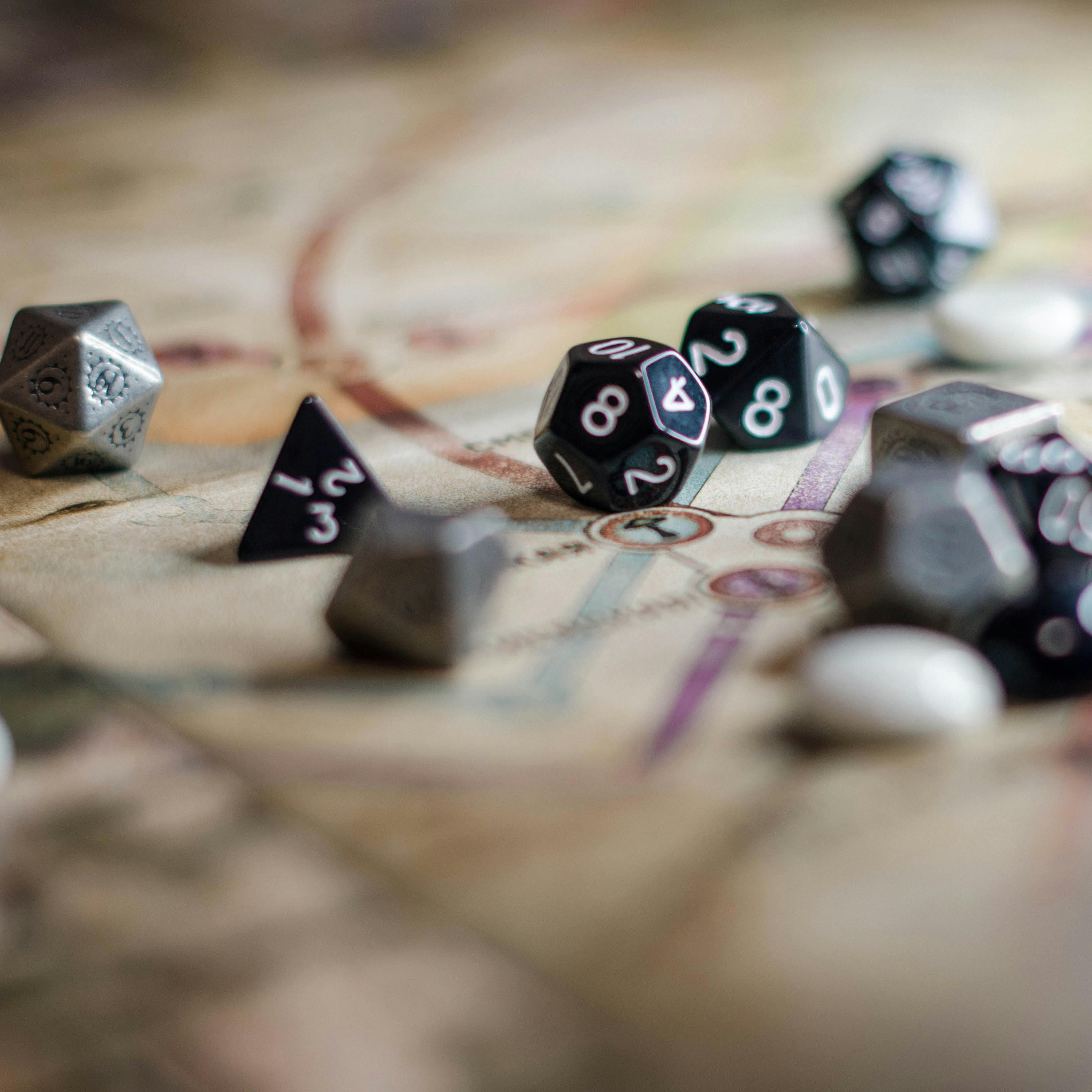
- Dice Set: The iconic polyhedral dice (d4, d6, d8, d10, d12, d20) are essential for most fantasy RPGs. A set of seven dice is a great start.
- Character Sheet: A printed or digital sheet to track your character’s stats, inventory, and abilities.
- Pencil and Eraser: For tracking hit points, experience, and taking notes on your character sheet.
- Core Rulebook: While you don’t need to memorize it, the core rulebook for your chosen system (e.g., Dungeons & Dragons, Pathfinder) is your ultimate reference guide.
Preparation: Choosing Your Role
There are two main roles in TTRPGs:
- The Player: Focuses on creating and making decisions based on your character’s personality and goals. Your job is to embody the character and contribute to the story.
- The Game Master (GM): The narrator, referee, and designer of the world. Your job is to present the story, describe the environment, play all the non-player characters (NPCs), and adjudicate the rules. This role requires more preparation but offers the greatest creative freedom.
Character Creation Basics
- The Concept: Start with a simple idea: a grumpy dwarf warrior, a naive elf wizard, or a charming human bard.
- The Flaw: Give your character a flaw (e.g., afraid of heights, overly trusting). Flaws make characters interesting and drive the story forward.
- The Motivation: Why is your character adventuring? (e.g., to find a lost family heirloom, to escape a dark past, or to seek fame and fortune). This is the engine of your character.
Techniques: The Art of Role-Playing and World-Building
The Player’s Technique: “In-Character” Immersion
- “Show, Don’t Tell”: Instead of saying, “My character is angry,” say, “I slam my fist on the table and demand to know who is responsible.” Use actions and dialogue to convey emotion.
- Ask Questions: Don’t wait for the GM to tell you what to do. Ask questions like, “What does the room smell like?” or “Is there anything in the shadows?” This shows engagement and helps the GM build a richer world.
- Embrace Failure: Sometimes your character will fail a roll or make a bad decision. Don’t try to retcon it…embrace the failure, as it often leads to the most memorable and funniest moments in the story.
The GM’s Technique: Collaborative World-Building
- The “Yes, And…” Rule: Borrowed from improv, this is the GM’s most important tool. When a player suggests something unexpected, don’t say “No.” Say, “Yes, and…” and build on their idea. (e.g., Player: “I try to bribe the guard.” GM: “Yes, he accepts the gold, but he also demands your prized lucky charm.”)
- The Rule of Cool: If a player has a brilliant, cinematic idea that slightly bends the rules, let them do it! The goal is to tell a great story, not just follow the rules strictly.
- Focus on the Players: The world is the backdrop, but the players are the stars. Ensure every player gets a chance to shine and use their unique skills.
Common Challenges & Solutions
| Challenge | Cause | Solution |
|---|---|---|
| Rules Lawyering | Players arguing over the exact interpretation of a rule | The GM makes the final call. The GM should say, “For the sake of the story, we will rule it this way for now, and I will look up the official rule after the session.” |
| Shy Players | A player is hesitant to speak up or role-play their character | The GM should ask direct questions to the shy player (e.g., “The merchant looks at your character, Elara. What do you say to him?”) to gently encourage participation. |
| Scheduling Conflicts | Difficulty getting a group together for a 4-hour session | Schedule shorter, regular sessions (e.g., 2 hours every other week). Use a scheduling app to find the best time for everyone. |
| GM Burnout | The GM feels overwhelmed by the amount of preparation needed | Run a “one-shot” (a single, self-contained adventure) instead of a long campaign. Use pre-written adventures and ask players to help with world-building or playing NPCs. |
Tips for Success
- Session Zero: Before the first game, hold a “Session Zero.” This is where you discuss the rules, the type of game you want to play (serious, silly, combat-heavy), and any topics the players want to avoid. This sets expectations and prevents conflicts.
- Use Visual Aids: Maps, character art, and simple sketches of the room can help players visualize the scene. Digital creative skills can come in handy here.
- Keep a Campaign Journal: The GM should keep a journal of important events, NPC names, and decisions players make. This ensures consistency and makes the players feel like their choices matter.
- The Rule of Fun: If the group is having fun, you’re doing it right. Don’t worry about being a perfect GM or player. Embrace the chaos and collaborative nature of the game.
Conclusion
Fantasy & Tabletop RPGs are a deeply immersive and rewarding hobby that fulfill the human need for storytelling and connection. By rolling the dice and creating your character, you’re not just playing a game…you’re co-creating a narrative that will be remembered long after the session ends. Sharpen your pencils and let the adventure begin!
Ready to start your first campaign? Download our free comprehensive guide to kick off your adventure! Or, explore our related guides on Card & Board Games and Esports & Digital Gaming for more ways to engage with the world of games.