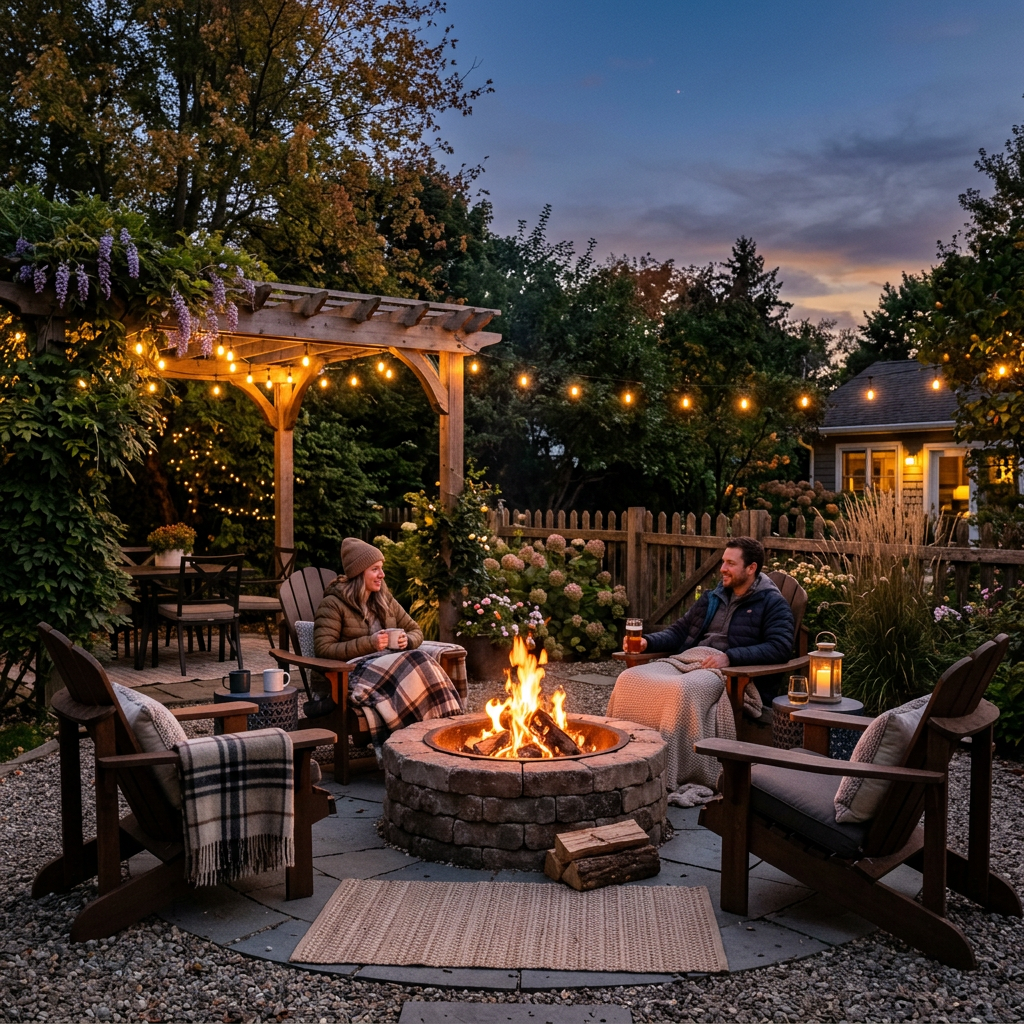
There is something about a fire that slows people down.
Not in a frustrating way. In the way that matters. The way where phones get set aside and conversations stretch longer than they normally would. Where hotdogs on sticks become a legitimate dinner choice and nobody argues about it. Where a Tuesday night becomes something worth remembering.
Growing up, our family had a fire pit in the backyard. It wasn’t fancy. It didn’t need to be. What it was, was consistent…a weekly gathering place that sometimes turned into several nights a week depending on the season and who showed up.
Some nights it was the whole family. Some nights, teenage friends would drift over, and we’d sit out there for hours doing what teenagers do with nowhere particular to be…actually talking. (A time before smartphones littered the Earth.) Some nights we’d set up a tent nearby and make a whole backyard adventure out of it.
And some nights my dad would just build a fire and sit out there by himself.
I understood that even then. There’s something about watching fire that quiets the noise inside a person. It doesn’t ask anything of you. It just burns.
My brother carries that tradition forward now. He sits around the fire with his two boys…Drake and Cole…the same way our dad did with us. Different generation, same fire, same unhurried conversation. That continuity means something.
If you don’t have a fire pit yet, here’s how to think about getting one…and more importantly, how to use it well.
Choosing Your Fire Pit

In-ground vs. above-ground:
An in-ground fire pit is permanent and gives a natural, rustic feel. You dig a circular pit, line it with gravel and stone, and you’re essentially done. It costs almost nothing if you do it yourself.
An above-ground fire pit…either a metal bowl style or a ring of stone…is more flexible. You can reposition it, it keeps the fire slightly more contained, and it’s easier to manage airflow.
For most backyard situations, a simple above-ground metal fire pit from a hardware store ($40-80) is the practical starting point. If you want something permanent and more substantial, a stone ring dug into the ground costs mostly just your Saturday afternoon. My dad built the in-ground fire pit toward the back of our yard. It was at a level spot at the bottom of a slope, surrounded by trees, and close to the creek…a slice of paradise.
Size matters:
A fire pit that’s too small frustrates people. Too large and you’re burning through wood fast with more fire than you need. For family gatherings, a diameter of 36-44 inches is a comfortable sweet spot…enough fire to feel real, small enough to manage.
Placement:
Keep it at least 10-15 feet from your house, fence, and any overhanging trees. Check your local ordinances…some areas have restrictions on open burning. Level ground matters more than people realize. A fire pit on a slope is a headache.
Wood and Fire

Not all wood burns the same and the difference matters more than most beginners expect.
Hardwoods…oak, hickory, maple, cherry…burn hot, long, and produce good coals. These are your workhorses for a solid evening fire.
Softwoods…pine, cedar, spruce…catch quickly and are great for starting a fire, but they burn fast and pop more than hardwoods. Fine for kindling, less ideal for a long evening.
Never burn: treated lumber, painted wood, plywood, or anything that’s been chemically processed. The smoke is toxic and the smell is unpleasant for everyone sitting around it.
Seasoned wood…wood that’s been cut and dried for at least six months…burns cleaner and easier than green wood. If you’re buying firewood, ask if it’s seasoned. If you’re cutting your own, plan ahead.
For starting the fire:
Tinder (dry leaves, newspaper, wood shavings) at the center. Small kindling over that in a loose teepee or log cabin shape. Your larger logs around the outside. Light the tinder at the base and let the fire climb naturally. Resist the urge to smother it with too much wood too fast.
The Practical Safety List
None of this is meant to be preachy…just the things worth knowing:
- Keep a bucket of water or a garden hose nearby. Not because you expect to need it, but because having it there means you never have to think about it.
- Never leave a fire completely unattended, especially with children or pets nearby.
- Build fires appropriate to the conditions. Windy nights call for smaller fires.
- When the evening is done, douse the coals thoroughly with water and stir them. Coals can stay hot for hours longer than you’d expect.
- Teach kids early about fire respect…not fear, respect. There’s a difference. A child who understands fire is safer than one who’s simply been kept away from it.
For more safety and information, check out our page about how to build a fire without matches.
The Part Nobody Puts in the Instructions
Here’s what the hardware store doesn’t tell you when you buy the fire pit:
It only works if you use it.
The families I know who actually gather around fire regularly didn’t build elaborate outdoor living spaces first. They didn’t wait until the yard was perfect or the weather was ideal or the kids were old enough. They just built a fire on a Wednesday night and sat down.
The conversations that happen around a fire are different from the ones that happen around a dinner table or a television. Something about the shared focus…everyone looking at the same thing, the same warmth, the same light…opens people up in a way that other settings don’t.
My dad knew this without ever needing to explain it. He just kept building fires.
If you have kids at home, a fire pit is one of the best investments you can make in your family’s time together. Not because of the fire itself, but because of what tends to happen around it.
Start simple. Build the fire. Sit down.
The rest takes care of itself.
J. Daniel Rogers is a writer, artist, and the founder of Hobbies & Homes…a community for people who believe that a creative, intentional home is worth building. He grew up around backyard fires in Oklahoma and considers hotdogs on a stick a legitimate culinary tradition. (No “hotdog on a stick” recipe provided)


Leave a Reply