This content was created with AI assistance and reviewed for accuracy and quality by the H&H team.
Bushcraft is the art of thriving in the wild using traditional skills and a deep understanding of nature. It’s about becoming self-reliant and learning practical skills like shelter building, fire-making, foraging, and navigation, all while minimizing reliance on modern tools. This guide will introduce you to the core practices of bushcraft, helping you reconnect with nature and develop the skills needed for outdoor living.
Why Bushcraft?
Bushcraft enhances self-reliance, problem-solving, and physical fitness through outdoor tasks. It also promotes mental well-being, offering peace and mindfulness while mastering practical skills. Bushcraft connects us to nature and encourages sustainable living, fostering a deep respect for the environment.
Getting Started: Essential Gear
While bushcraft focuses on using natural resources, a few reliable tools are essential:
- Knife: A full-tang, fixed-blade knife for carving and cutting.
- Axe or Hatchet: For processing firewood and felling small trees.
- Saw: A folding or bow saw for cutting larger wood.
- Fire Starter: Ferro rod, waterproof matches, or a lighter.
- Cordage: Paracord for shelter building and repairs.
- Tarp: Lightweight shelter material for protection from the elements.
- First-Aid Kit: A comprehensive outdoor kit for injuries.
- Water Bottle and Purification Method: For safe hydration.
- Navigation Tools: Map, compass, and optional GPS.
- Appropriate Clothing: Dress in layers, focusing on natural fibers like wool.
Techniques & Methods
Master these fundamental bushcraft skills:
Fire Craft:
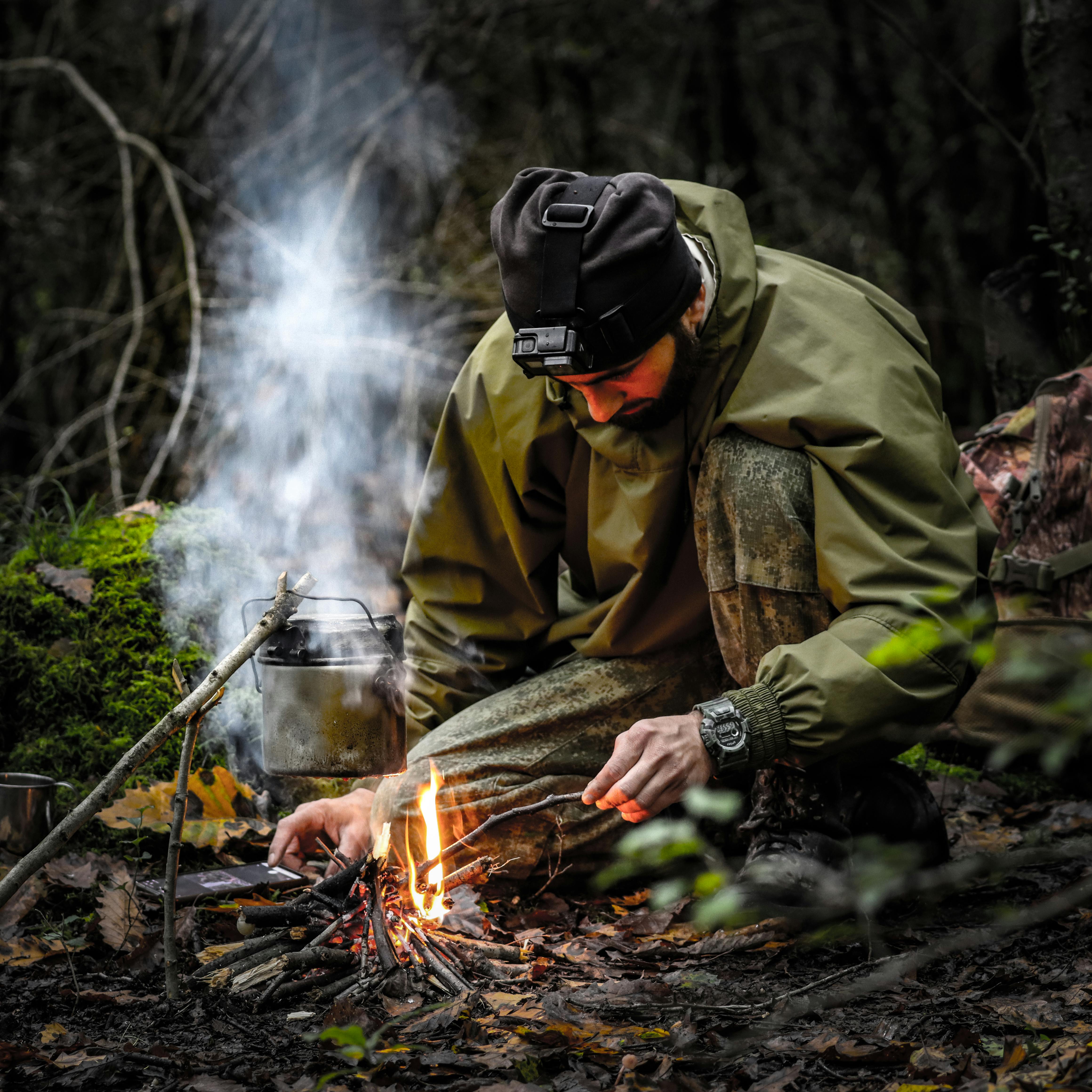
- Ignition: Learn multiple fire-starting techniques (e.g., ferro rod, friction fire).
- Tinder & Fuel: Understand the hierarchy of materials for starting and maintaining a fire.
- Fire Lay: Practice different fire lays for warmth and cooking.
- Fire Safety: Always ensure your fire is fully extinguished.
Shelter Building:
- Natural Shelters: Learn to build debris huts, lean-tos, or snow shelters.
- Tarp Shelters: Master tarp configurations (e.g., A-frame, lean-to).
- Site Selection: Choose a safe, level site away from hazards.
Water Sourcing & Purification:
- Finding Water: Locate natural water sources (streams, rain, plant condensation).
- Purification: Learn to purify water through boiling or using filters.
Navigation:
- Map & Compass: Learn basic navigation techniques, using a map and compass for bearings.
- Natural Navigation: Use the sun, stars, and landmarks to navigate.
Foraging & Food Procurement:
- Plant Identification: Know which plants are edible and safe to consume.
- Trapping/Fishing: Learn primitive methods for sourcing food, ensuring ethical practices.
Common Challenges & Solutions
- Lack of Skills: Start small and focus on mastering one skill at a time.
- Fear/Discomfort: Begin with short trips and gradually challenge yourself.
- Inadequate Gear: Invest in reliable tools and practice using them.
- Environmental Hazards: Research local conditions and always carry a well-stocked first-aid kit.
- Ethical Concerns: Follow Leave No Trace principles and respect wildlife.
Tips for Success
- Start Local: Practice skills in familiar environments before heading into remote areas.
- Learn from Mentors: Seek guidance from experienced practitioners and instructors.
- Practice Consistently: Regular practice is key to developing proficiency.
- Embrace the Learning Curve: Don’t get discouraged by setbacks; each mistake is a lesson.
- Keep a Journal: Document your skills, experiences, and observations for future reference.
- Enjoy the Journey: Bushcraft is a lifelong journey…focus on the process, not just the outcome.
Conclusion
Bushcraft is about more than just survival…it’s a way of living in harmony with nature, building self-reliance, and learning to thrive outdoors. Whether you want to master fire-starting, build shelters, or feel more confident in the wild, bushcraft offers a fulfilling and meaningful journey. So, grab your tools, step outside, and start exploring the wilderness!
For more information, download our comprehensive guide for free!